How to Choose a Dune Buggy for the Dubai Desert
Choosing a dune buggy for the Dubai desert is less about picking the flashiest vehicle and more about matching the machine to the terrain, the driver and the kind of outing planned. The desert looks open and simple from a distance, but soft sand, changing light and long stretches between landmarks make preparation matter. A sensible choice makes the drive smoother and helps everyone know what to expect before the engine starts.
Start with the purpose of the drive
Before comparing models, decide what the buggy needs to do. A short outing near accessible dunes asks for different features than a longer route across open desert. If the aim is a relaxed sightseeing trip, comfort and easy controls may matter more than raw power. If the route includes steep dunes or uneven tracks, engine response, suspension travel and ground clearance become more important.
Think about who will be sitting in the passenger seat too. Children, older passengers or anyone sensitive to heat and dust may need a calmer pace and a vehicle with better seating support. The right decision usually comes from the full picture, not from one specification on a sales page. A buggy that suits a confident driver on a weekend ride may feel too firm or too loud for a family desert safari.
Set a clear skill level for the driver
The next step is to be honest about driving experience. A dune buggy is an off-road vehicle, and sand behaves differently from tarmac. The rear can slide, crests can hide dips, and a light touch on the accelerator often works better than force. New drivers benefit from a buggy that feels predictable, with steering that does not twitch at speed and power that arrives in a controlled way.
More experienced drivers may enjoy a stronger machine, but extra power is not useful if it encourages poor line choices. Watch for a vehicle that can be handled calmly at low speed as well as on longer stretches. If a guided tour is part of the plan, ask how the pace is managed and whether the route is suited to mixed ability groups. A good match reduces fatigue and keeps attention on the terrain rather than on controlling the vehicle.
Check the size and seating layout
Size affects both comfort and control. A compact two-seat buggy can feel nimble on tight dunes, while a larger all-terrain vehicle may offer more room and a steadier feel on open ground. The trade-off is that a larger machine can be harder to manoeuvre in confined areas, and passengers may feel more exposed if the seating is low or the roll structure is minimal.
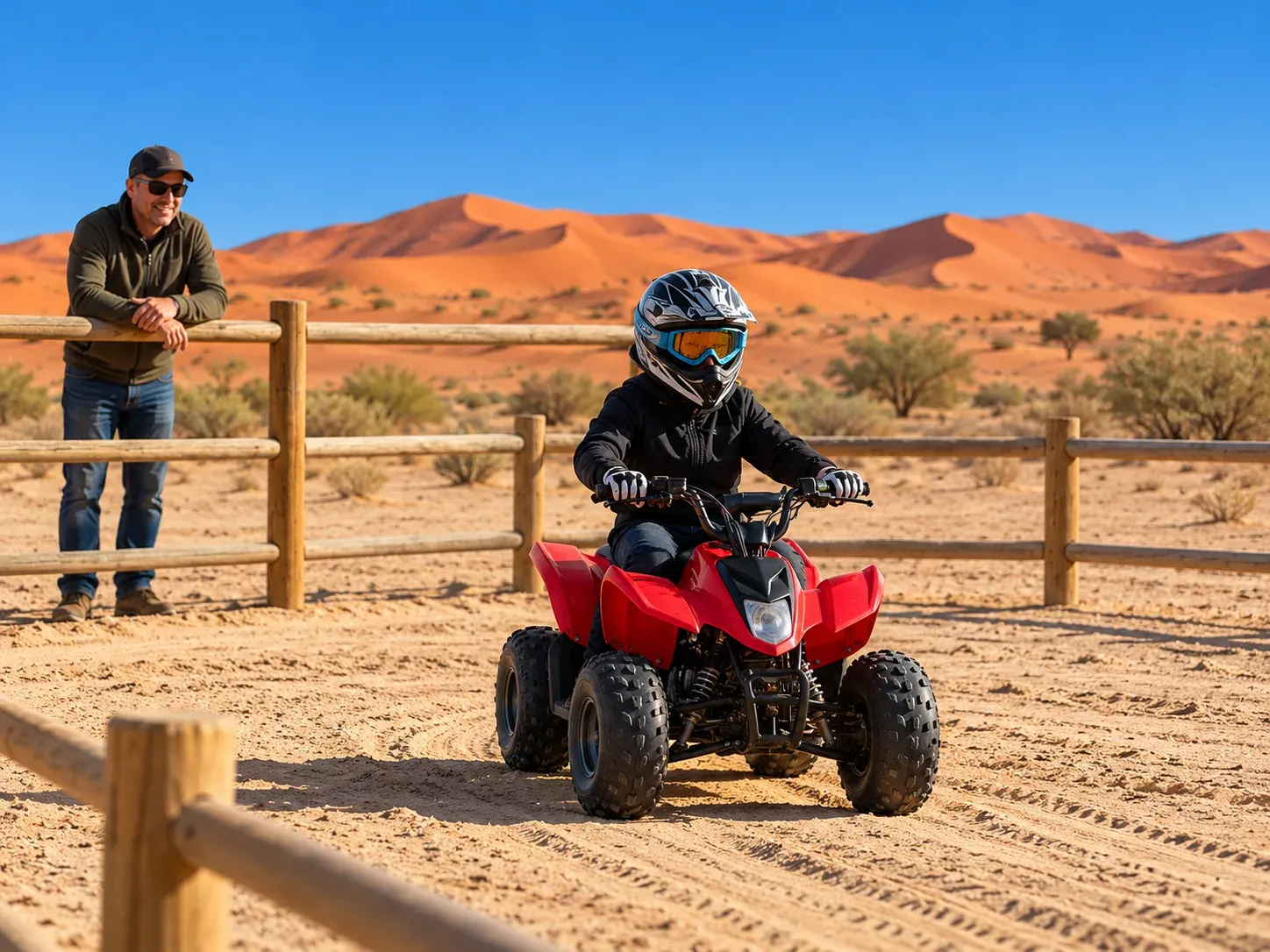
Look at the seating position before deciding. Seats should hold occupants firmly without pressing awkwardly on the shoulders or hips. Legroom matters more than many people expect, especially on a longer drive. Check whether passengers can brace themselves comfortably and whether the seating keeps everyone clear of moving parts. A buggy that looks roomy in a photo may feel cramped once helmets and safety gear are worn.
When comparing options for polaris dune buggy dubai, treat comfort as a practical safety point rather than a luxury. A rider who is shifting around to stay steady is less settled, and that can affect the driver. The best layout lets everyone sit back, stay aware and enjoy the desert without constant adjustment.
Look closely at suspension and ground clearance
Suspension is one of the most useful things to evaluate for dune driving. Soft sand, small rocks and hidden dips place repeated stress on the chassis. A buggy with limited travel may cope on smooth ground but feel harsh when the surface changes. Generous suspension travel helps the wheels stay in contact with the sand, which improves steering response and reduces jolts through the seats.
Ground clearance is also worth checking. Low points beneath the vehicle can catch on ridges or rough patches, especially when approaching a dune at an awkward angle. Higher clearance helps, but it can raise the centre of gravity, so it should be considered alongside width and suspension design. The aim is not simply the highest buggy, but one that balances clearance with stability.
Ask what conditions the buggy is intended for and whether the setup suits dune terrain rather than only hard-packed tracks. A machine that feels composed over rolling sand gives the driver more time to read the route ahead. This matters in the Dubai desert, where the surface can shift from firm to soft within a short distance.
Review brakes, tyres and basic controls
Brakes and tyres deserve careful attention because they shape how the buggy behaves when the route changes. On sand, braking too hard can cause the vehicle to dig in or lose direction. A pedal that feels vague or uneven makes smooth control harder. Before committing, look for a buggy with brakes that feel progressive and controls that are easy to reach without stretching.
Tyre choice affects grip, flotation and steering feel. Wide tyres can help spread weight over soft sand, while tyre pressure also influences how the buggy responds. If pressure adjustments are part of the outing, the person supervising should explain the appropriate range for the conditions. Avoid making mechanical changes without proper guidance, and leave faults involving brakes or steering to a qualified professional.
Controls should be simple enough to understand before leaving the starting area. Check where the handbrake, gear selection and indicator controls sit, and ask for a clear explanation of any unfamiliar switch. A driver should not be learning the layout while approaching a sand dune. Clear controls build confidence and allow the driver to keep eyes on the route.
Ask about safety gear and supervision
Safety gear is not an optional detail. Helmets should fit properly, and seat belts or harnesses should be in good condition and correctly adjusted. Dust can reduce visibility, so eye protection may also be useful. Loose clothing, scarves and unsecured bags should be avoided around an off-road vehicle.
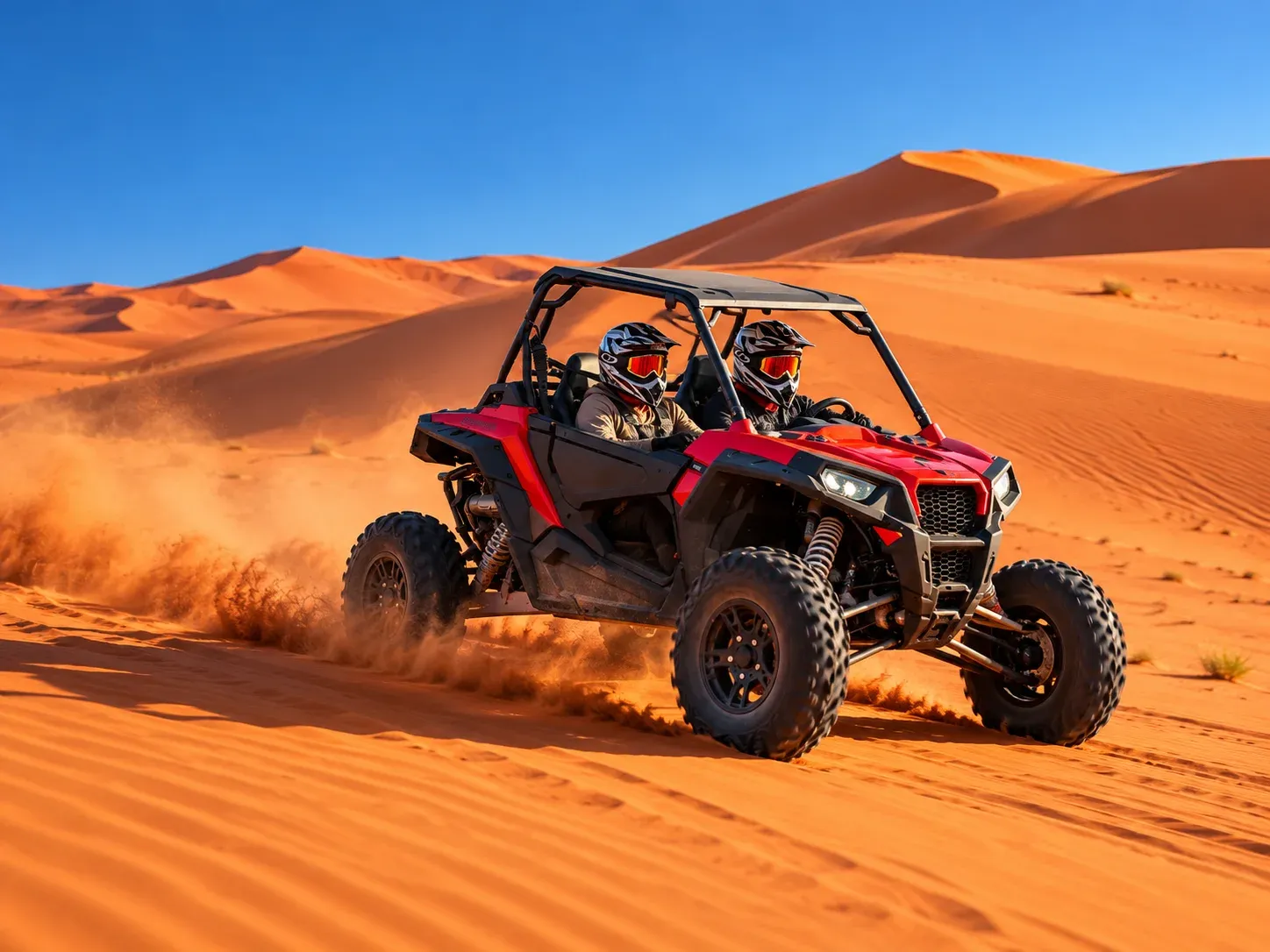
Supervision matters as much as equipment. A guided tour can help newer drivers understand line choice, stopping distance and how to approach crests. Check whether the route is explained before departure and whether there is a clear plan for regrouping. If the outing includes several buggies, spacing and signals should be understood by everyone.
Useful questions before choosing include:
- Is the buggy suited to the planned route and driver experience?
- Are helmets, belts and other safety gear provided in the right sizes?
- How are slower drivers or passengers accommodated?
- What happens if the weather or sand conditions change?
The answers reveal whether the outing is organised around safety or simply around speed. A professional approach gives clear limits and avoids pressure to drive beyond a person's ability.
Compare the route with the vehicle
The route should shape the final choice. Flat desert tracks, rolling dunes and steep climbs all place different demands on the buggy. A vehicle that feels lively on open ground may be less suitable for narrow paths or areas where riders gather. If the plan includes a desert safari with stops, check that the buggy is comfortable to enter and exit repeatedly.
Time of day is another practical factor. Midday heat can make long drives tiring, while late afternoon light changes how dune shapes are seen. Dust and glare can affect visibility, so the driver needs a buggy with a clear view forward and minimal blind spots around the seating area. The Dubai desert can feel deceptively calm, and a route that looks easy at first may require steady concentration later.
On dune-buggy-dubai.net, the subject is best approached from the reader's point of view: what the buggy must handle, how the driver feels in control and whether the whole outing fits the group. That perspective keeps the decision grounded in real conditions rather than in appearance alone.
Check condition before committing
A careful condition check can prevent a disappointing day. Walk around the buggy and look for obvious damage, loose panels, worn tyres or fluid marks beneath the vehicle. These signs do not always mean a serious problem, but they should prompt questions. If something looks unclear, it is better to ask before the outing than to raise concerns once the group is ready to leave.
Listen during a quiet start, if that is available, and notice whether the engine idles evenly. Steering should respond smoothly, and the buggy should not pull sharply to one side on firm ground. Any fault involving steering, brakes or unusual mechanical noise should be treated as a problem for a qualified professional, not something to ignore or test at speed.

Also check practical details such as storage for small items, access to the seats and protection from dust. These points rarely decide a choice on their own, but they affect comfort across the whole drive. A buggy that is easy to settle into helps the day begin calmly.
Make the final choice with margins in mind
The final decision should leave room for judgment. Choose a buggy that suits the driver today, not the driver someone hopes to become after a few runs. If there is doubt between a stronger machine and a more controllable one, the controllable option is usually the wiser choice in dune terrain. Sand rewards smooth inputs and patience.
Read the whole outing from start to finish: arrival, safety briefing, first dunes, stops, return and the time spent seated between sections. A buggy may perform well in motion but feel tiring over a longer period. Comfort, visibility, suspension, brakes and supervision all work together, and no single feature can make up for a poor fit elsewhere.
Once the route, driver and vehicle line up, the choice becomes much clearer. A well-matched dune buggy allows the Dubai desert to feel spacious and interesting rather than demanding. That is the result a careful selection process should aim for, with every decision made around control, comfort and respect for the terrain.